About Dwejra Inland Sea
The Inland Sea, Il-Qawra in Maltese, is a round lagoon at Dwejra on Gozo's west coast. It formed as a collapsed sinkhole, and it is cut off from the open sea by a wall of cliff, joined to it only by a natural tunnel about 80 metres long. At its inner end is a small pebble beach lined with fishermen's boathouses, where the boats that run trips out through the tunnel tie up.
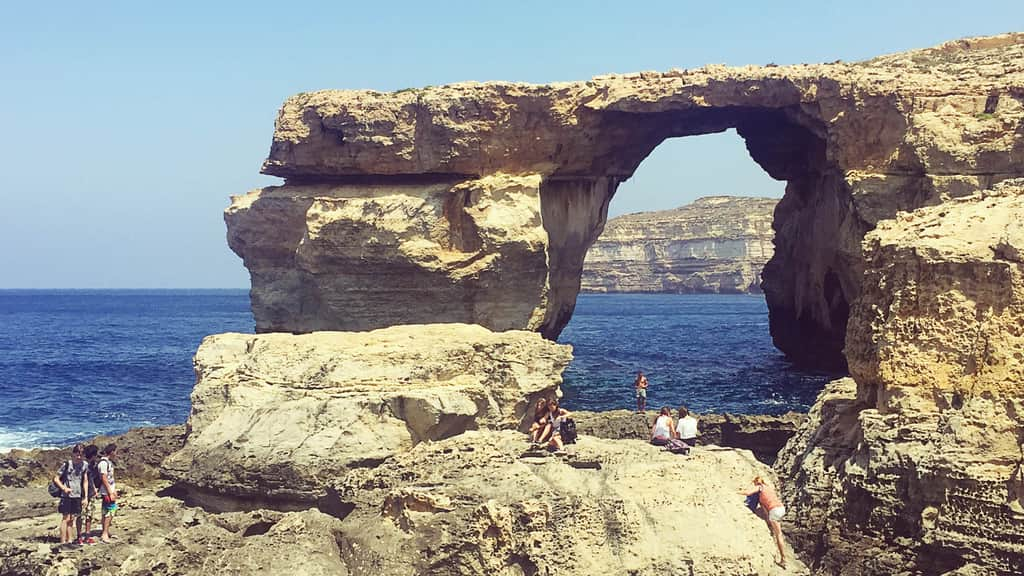
This is the sheltered half of Dwejra. When the open coast at the old Azure Window site and the Blue Hole is too rough, the lagoon is often still fine for a swim, and it is also where many divers start one of Gozo's best-known shore dives. The whole Dwejra area is a Special Area of Conservation, and it has been on Malta's tentative list for UNESCO World Heritage status since 1998.
What the Inland Sea is like
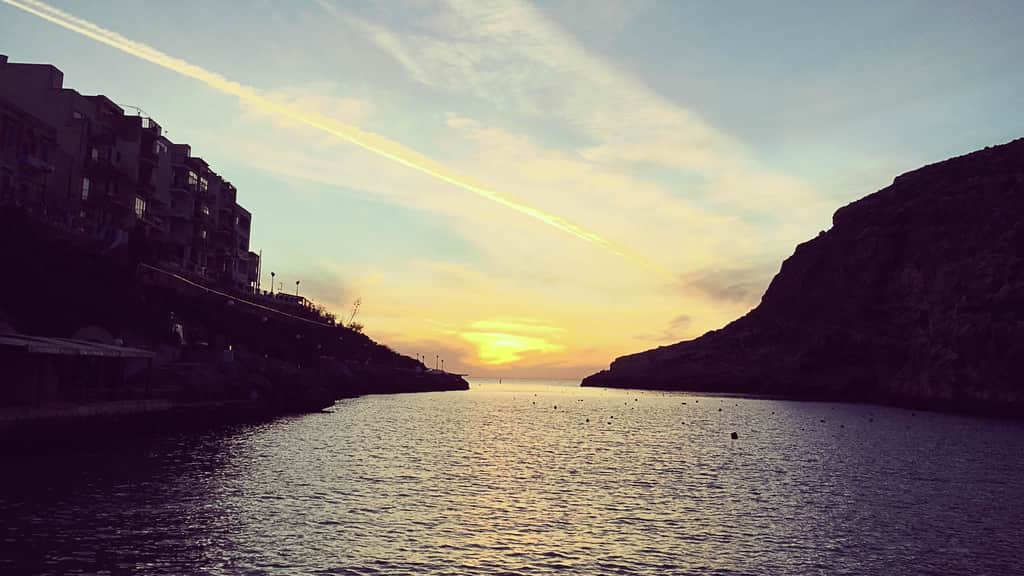
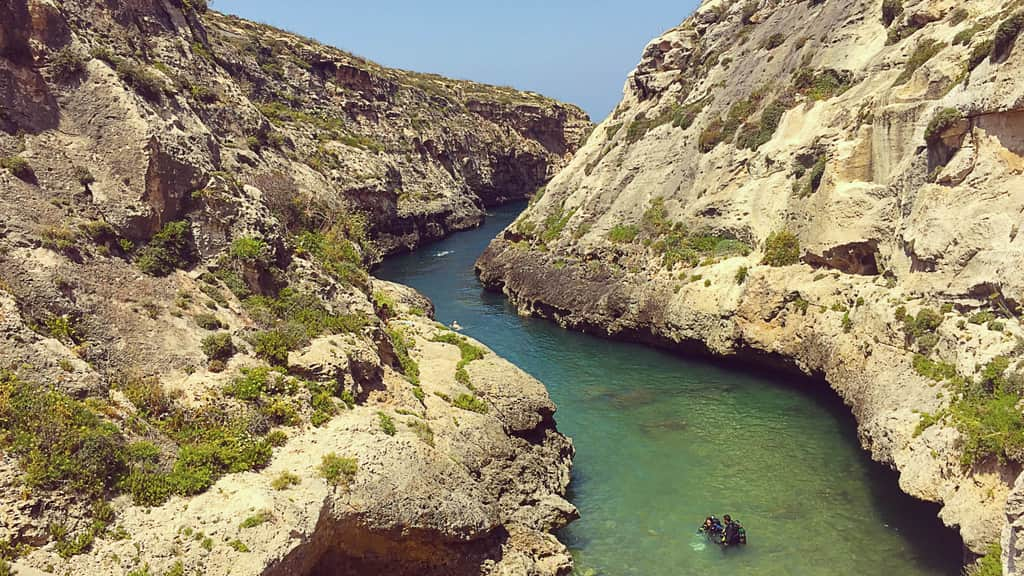
High limestone cliffs ring the lagoon, with the beach and boathouses at the landward end and the dark mouth of the tunnel on the far side, opening west into Dwejra Bay. Most of the lagoon floor is rock, and it is shallow in many places, with a bottom that is hard to read from the surface. A mask makes swimming here much easier and far more interesting, and the water is usually clear.
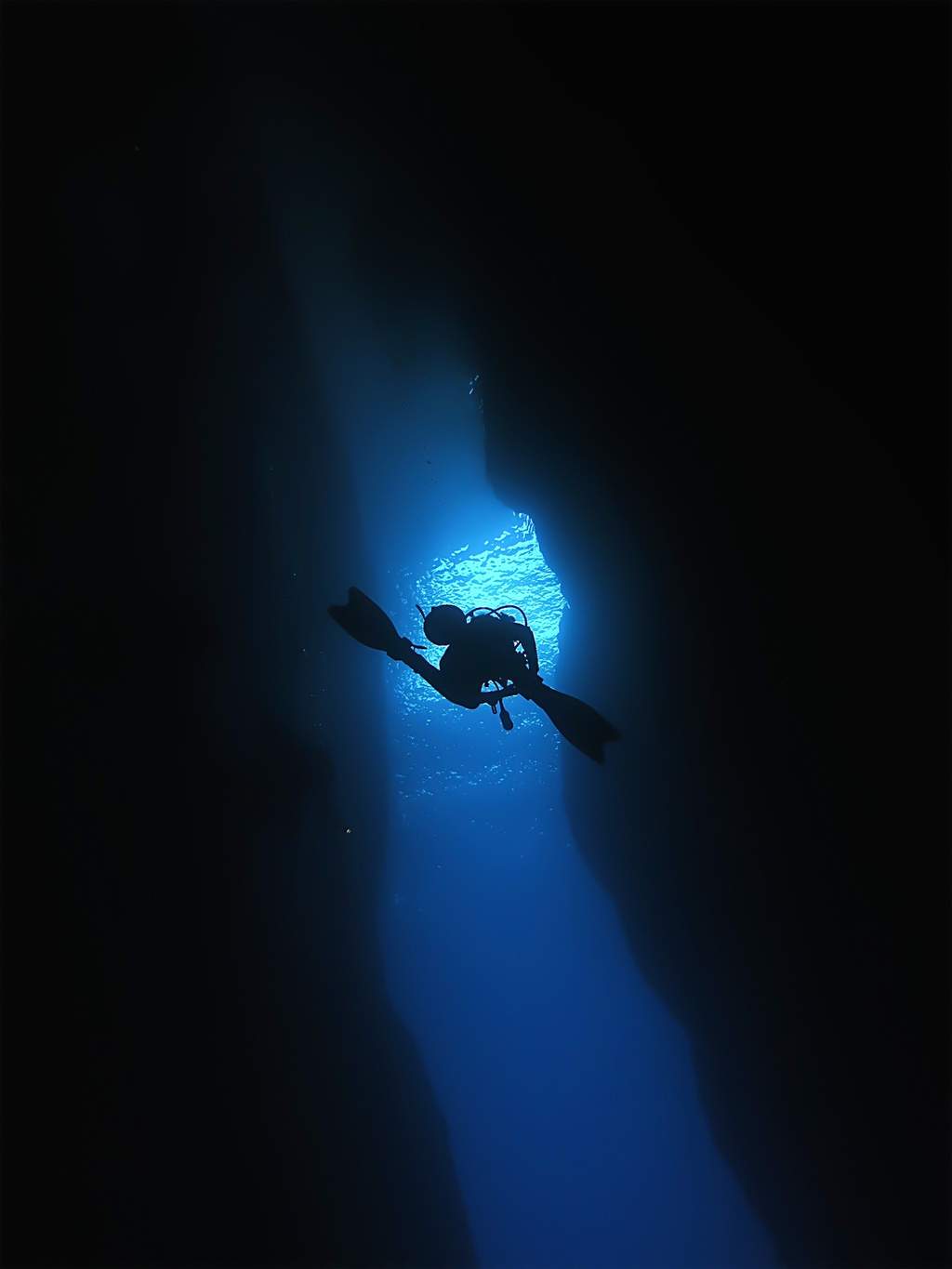
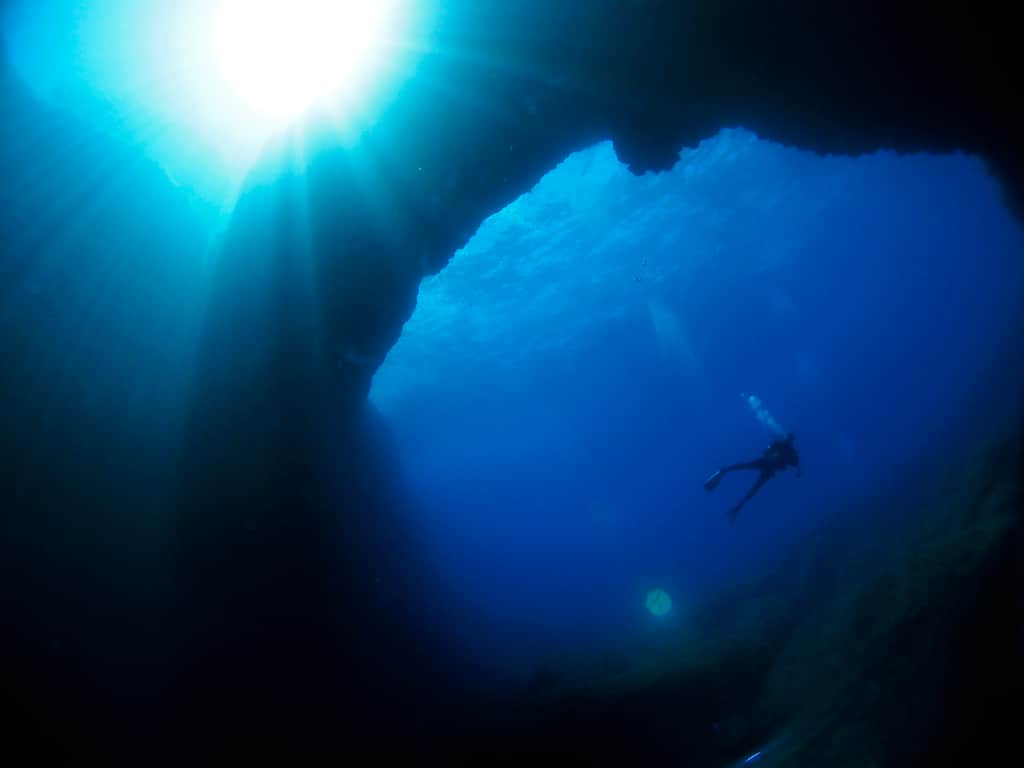
The tunnel follows a natural joint in the rock. It starts at around 6 metres deep, and the seabed drops to about 25 metres along its length before it opens onto the reef outside, where the bottom falls away much further. Its walls are covered in sponges and coral, and on a sunny day the light coming through turns the water a deep blue. In 2016 an investigation found that explosives had probably been used to cut rock inside the tunnel, reportedly to widen it for bigger boats.
When to go to the Inland Sea
Because the lagoon opens to the sea only through the tunnel, it stays calmer than the coast around it on most days. It is at its best in north-easterly, easterly, south-easterly or southerly winds. A strong north-westerly, Malta's most common wind, pushes swell straight through the tunnel and into the lagoon, and northerly, westerly or south-westerly winds can make it choppy too. When the swell is big, the boat trips stop and the tunnel is no place to swim.
Late morning to mid-afternoon in summer is the busiest time, when tour coaches and boat trips arrive and the little beach fills up. Early mornings are quiet. Late afternoon is good as well, and you can walk a few minutes to the open coast to watch the sun set over the sea. Out of season the lagoon belongs mostly to walkers and divers.
Swimming and safety at the Inland Sea
The main hazard is boat traffic. In season, small boats run between the beach and the tunnel all day, and divers use the same route underwater. Stay close to the edges of the lagoon, keep out of the boats' path to the tunnel, and use a brightly coloured float if you swim any distance. Don't count on a lifeguard here, and keep children near the shore.
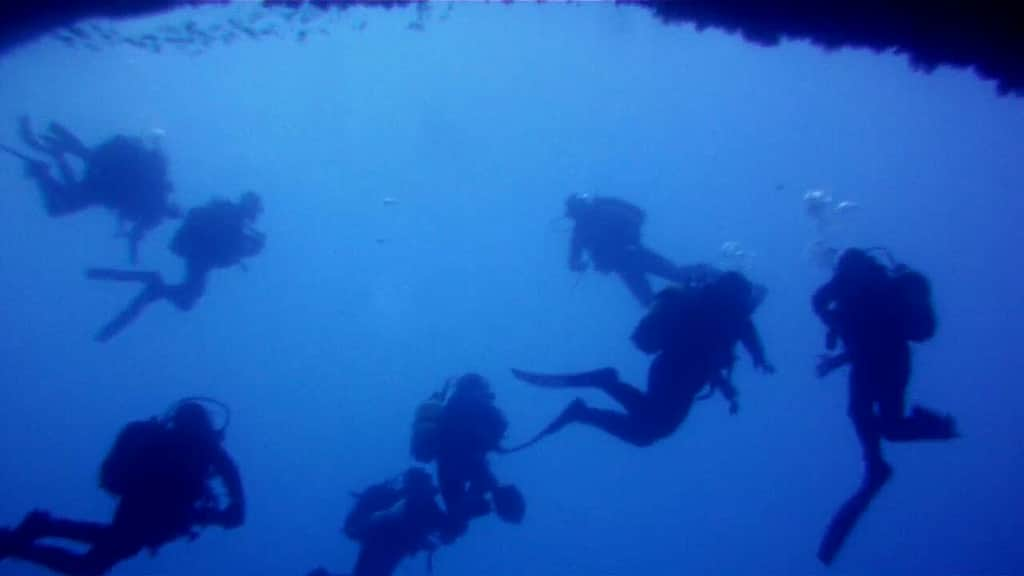
Strong swimmers and snorkellers sometimes swim out through the tunnel to the open sea. Only do this on a flat calm day, with someone else, and keep to one side: the tunnel is long, deep and dim in the middle, and a swimmer's head is hard for boat crews to see. Divers are told to keep to the left going out and the right coming back in, and never to surface inside the tunnel.
Diving and boat trips at the Inland Sea
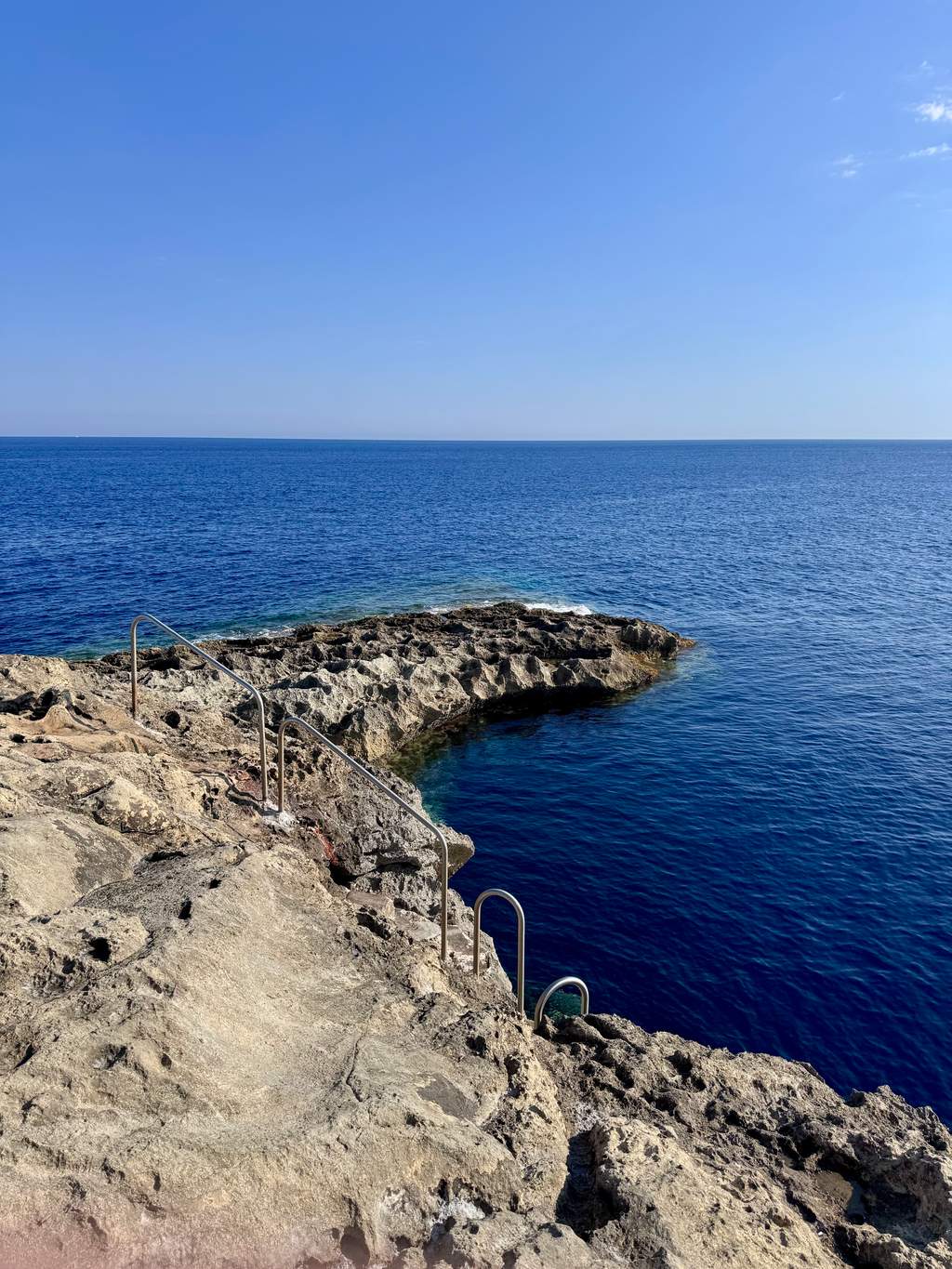
The Inland Sea is one of the most popular shore dives on Gozo. Divers kit up by the beach, swim out through the tunnel and come out over a reef at around 30 metres, with octopus, barracuda and parrotfish. Experienced divers can follow the wall to the left, past Għar ix-Xiħ (Old Man's Cave), to the boulders of the fallen Azure Window, and finish at the Blue Hole. A torch helps inside the tunnel, and dive centres from all over Gozo bring groups here.
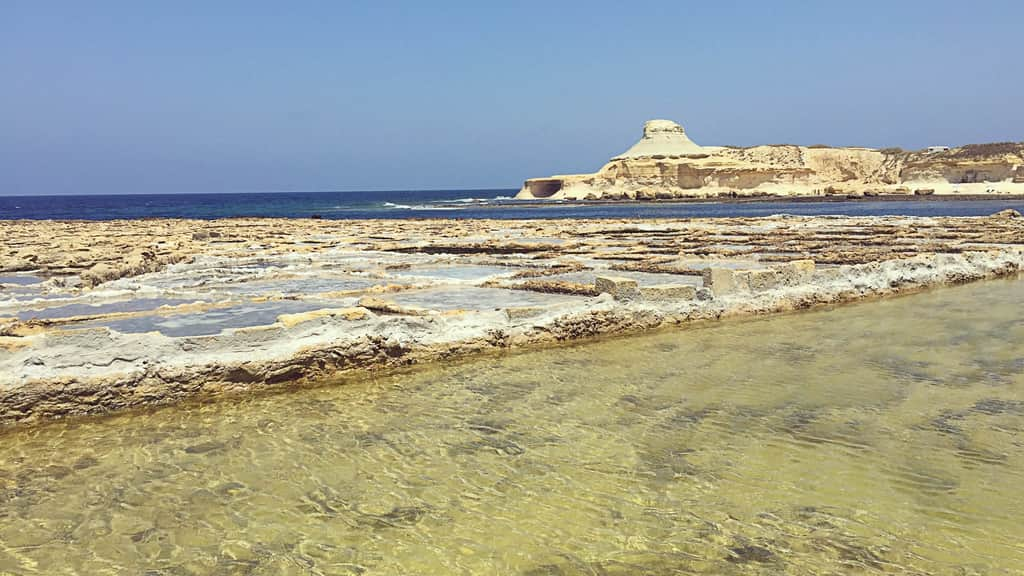
The fishermen's boat trips leave from the beach, go out through the tunnel and follow the cliffs past sea caves, a rock shaped like a crocodile and Fungus Rock. Kayak tours also run from the lagoon. On land, Dwejra Tower, built in 1652 under Grand Master Lascaris, looks out over Fungus Rock from above Dwejra Bay. It is looked after by Din l-Art Ħelwa and opens to visitors, and the salt pans cut into the rock below it once helped pay for its upkeep.
Food and facilities at the Inland Sea
A restaurant and a kiosk stand a short walk up from the beach, and in season food and drinks trucks park around the main car park at Dwejra, along with a small souvenir shop. Public toilets are near the small chapel by the car park. There are no showers, sunbeds or umbrellas at the lagoon, and little shade on the pebbles in the middle of the day, so bring your own if you plan to stay.
Frequently asked questions
Is the Inland Sea sandy?
No. There is a small pebble beach, so bring a towel or mat, and water shoes help.
Can you swim in the Inland Sea?
Yes. It is usually calmer than the open coast, which makes it the better choice at Dwejra on windy days. Watch out for boats using the tunnel.
How do I get to the Inland Sea by bus?
Take bus 311 from Victoria to the San Lawrenz (Dwejra) stop. It runs roughly every hour.
How long is the tunnel at the Inland Sea?
About 80 metres. It links the lagoon to Dwejra Bay and the open sea, and both the boat trips and divers use it.
Can you dive at the Inland Sea?
Yes. It is a popular shore dive: you enter at the beach and swim out through the tunnel to the reef outside, at around 25 to 30 metres. A torch helps in the tunnel, and you should never surface inside it because of boats.
Is the Inland Sea good for children?
On calm days, with care. The lagoon is sheltered, but the beach is pebbly, the bottom is rocky and boats pass through all day, so keep children close to the shore.
Can you get to Dwejra Inland Sea by boat?
Yes. Boat trips to Dwejra Inland Sea run with Dwejra Boat Trips, Gozo Adventures / Sea Kayak Malta and Vitamin Sea Watersports.