About Balluta Bay
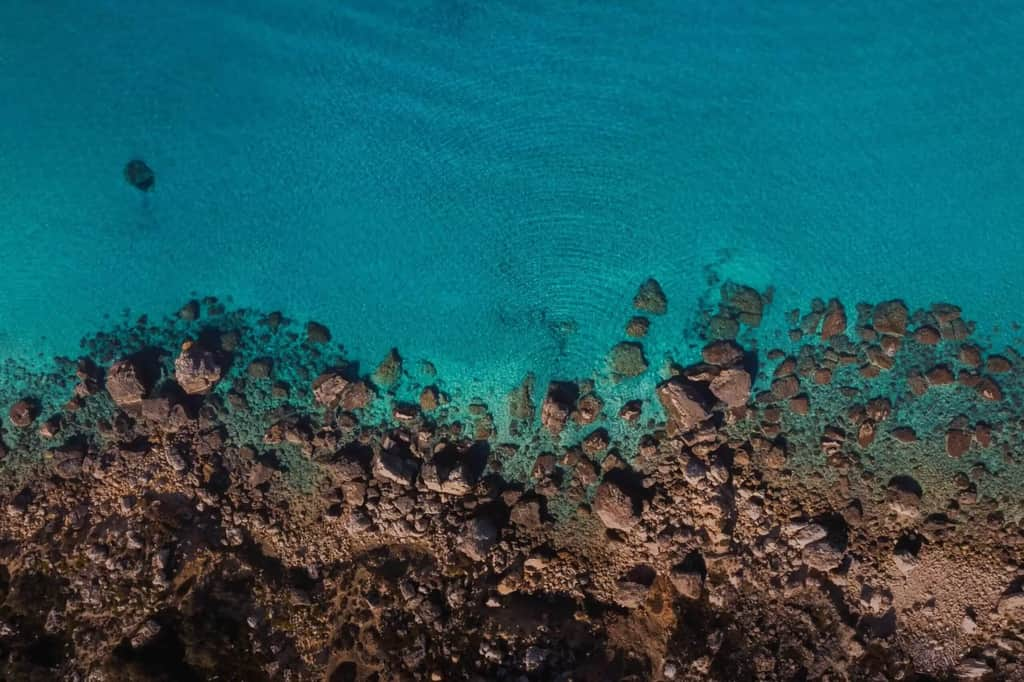
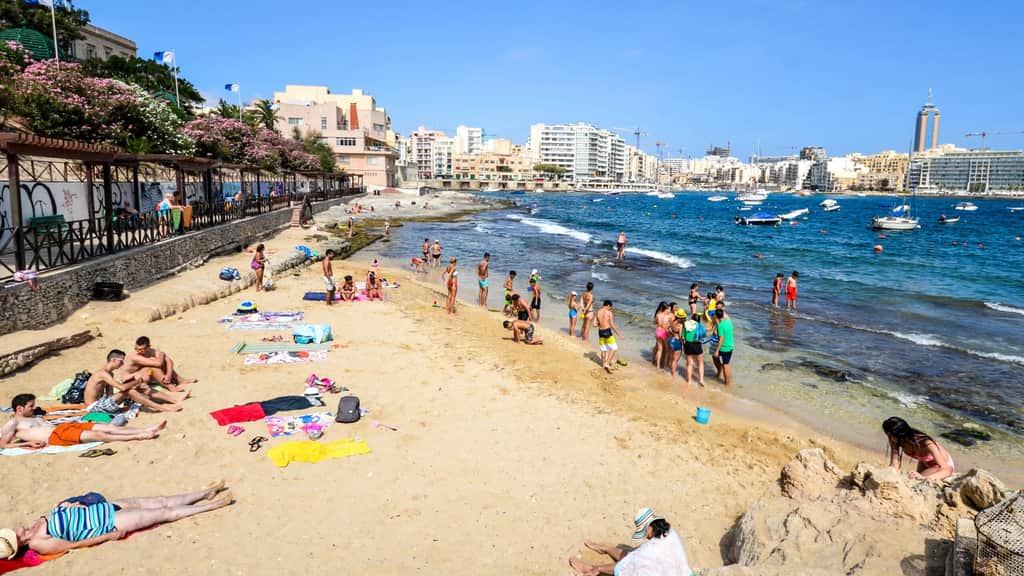
Balluta Bay is the small, curved bay where Sliema runs into St Julian's, overlooked by the neo-Gothic Carmelite church and the Art Nouveau Balluta Buildings. Its Maltese name, Bajja tal-Balluta, means oak tree bay. The shore is mostly rock and stone set out in tiers, with a small patch of sand at the head of the bay that has been replenished more than once since 2018.
This is a town swim rather than a beach day. People come for a dip before or after work, a quick cool-off on a walk along the seafront, or a coffee in the square while the light changes over the bay in the evening. It is one of the most photographed corners of St Julian's, and the cafés, restaurants and bus stops are all a few steps from the water.
What Balluta Bay is like
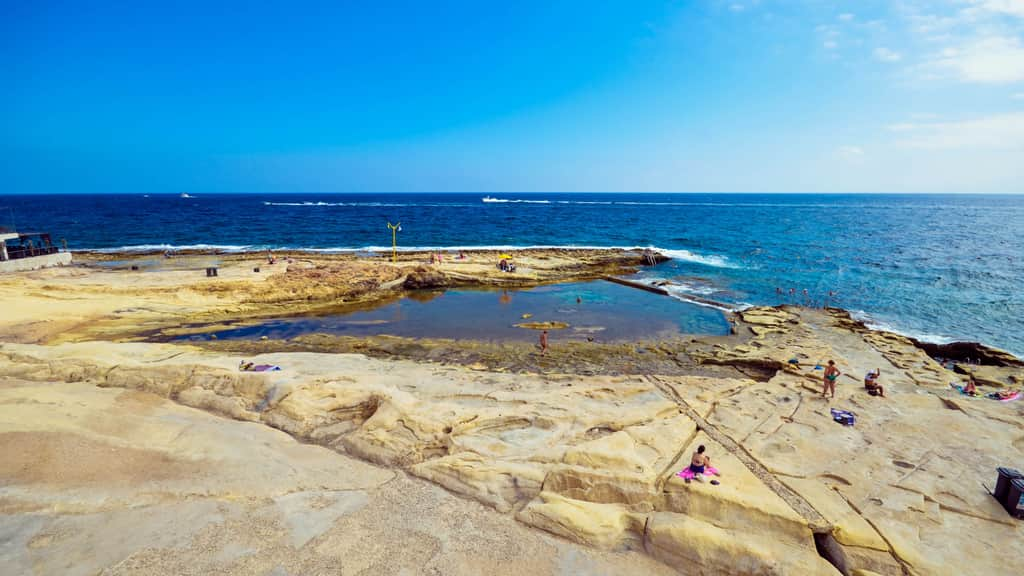
The bay is small and enclosed, with the promenade running right round it. Stone steps lead down from the promenade to rocky ledges and small pebbles, and at the head of the bay a triangular square shaded by Judas trees is lined with cafés. Apartment buildings line the eastern shore, and the Marriott hotel (formerly Le Méridien) stands on the south side, on the grounds of the 18th-century Villa Cassar Torregiani.
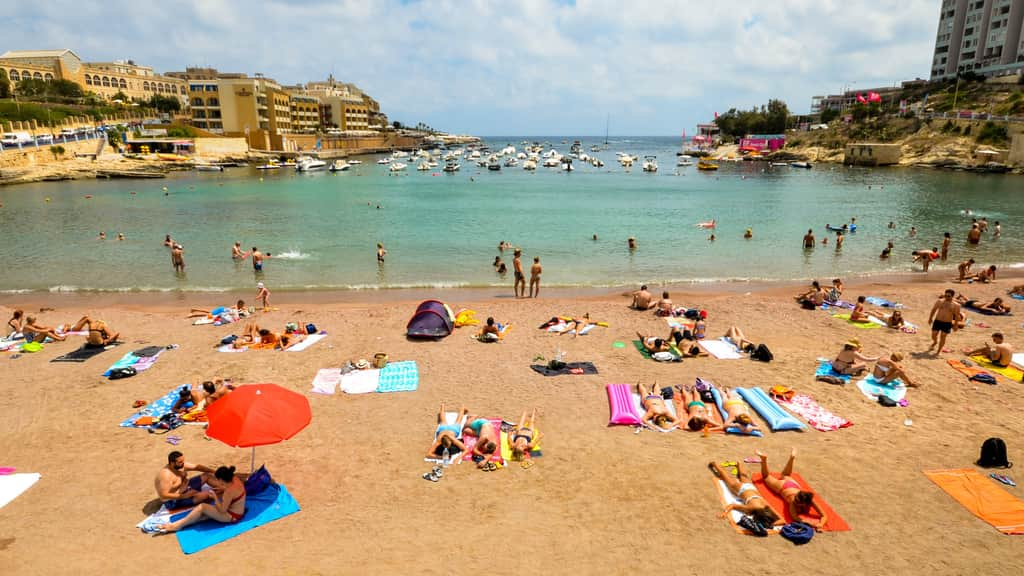
The sand has a short and eventful history. In July 2018 an experimental project dredged about 1,350 cubic metres of sand from the seabed further out in the same bay to create a beach of about 1,150 square metres. A severe storm in February 2019 swept most of it back out to sea, and the bay was regenerated again in time for summer 2019, with the hotel funding the sand. How much sand there is in any given summer depends on the winter storms, and the strip can almost disappear, so treat it as a bonus rather than a sandy beach.
When to go to Balluta Bay
Balluta Bay is sheltered from most wind directions, because the headlands either side shield it. It is best avoided in northerly or north-easterly winds, which push waves straight into the mouth of the bay and over the lower rocks. An easterly wind can also make it choppy. On a typical summer day with Malta's common north-westerly wind, the bay is usually calm enough for a swim.
Early mornings are the quietest time, and you will share the water with regular swimmers who come here year round. Late afternoon and evening are the busiest times in the square, and the bay is a popular spot to watch the evening light. After winter storms it is worth checking conditions before you go, as sand and debris can be pushed around the bay and the steps can be slippery.
Swimming and safety at Balluta Bay
You get into the water from the rocky tiers or the steps, and it deepens fairly quickly once you are off the rocks. Wear water shoes if you have them, as the rock is uneven and slippery near the waterline. Don't count on a lifeguard here, so supervise children closely.
Water quality is the main thing to watch. Balluta has been closed several times because of sewage: in 2024 the bay was closed to swimmers from late May for more than two months after E. coli and enterococci were found, a problem linked to an old, cracked storm-water and sewage system and a commercial premises. In June 2026 it was closed again for a few days after a short overflow. The Environmental Health Directorate posts notices when bathing is prohibited, so check before you swim, particularly after heavy rain.
Balluta Bay's church and landmarks
The Carmelite church of Our Lady of Mount Carmel dominates the bay. It started as a small neo-Gothic chapel in 1859, designed by Giuseppe Bonavia, was rebuilt in 1877 and again from 1900 to plans by Gustavo Vincenti, and was enlarged in 1958. Balluta became a parish of its own in 1974, and the church was dedicated in 1984.
Next to it, the Balluta Buildings are a 1928 apartment block designed by Giuseppe Psaila for Marquis John Scicluna, built on terraced fields that were once part of the garden of Villa St Ignatius. They are often described as one of the finest surviving examples of Art Nouveau architecture in Malta, although the facade is in need of restoration. Look out too for the terraced townhouses and Palazzina Vincenti around the bay.
Things to do near Balluta Bay
Balluta sits on the seafront promenade, so it fits easily into a longer walk. Head west along Tower Road towards Sliema and its rocky swimming spots, or east for a few minutes to Spinola Bay, with its fishing boats and waterfront restaurants, and on to Paceville and St George's Bay, the nearest proper sandy beach.
There are plenty of cafés, restaurants and kiosks around the square and along the front, and the hotel on the south side has its own facilities for guests. Bring only what you need for a swim: there is little space on the rocks for towels on busy days, and nowhere to leave bags safely while you are in the water.
Frequently asked questions
Is Balluta Bay sandy?
No. It is a rocky, pebbly shore set out in tiers, with no proper sandy beach.
Is Balluta Bay safe to swim in?
It is an official bathing site with monitored water quality. In June 2026 it was briefly closed after a sewage spill and reopened once tests showed the water was fit, so check current advisories.
How do I get to Balluta Bay by bus?
Buses 13, 13A and 14 run along the Sliema seafront past Balluta Bay, and many other routes stop in nearby St Julian's.
Why is it called Balluta Bay?
Balluta is the Maltese word for oak, so the Maltese name Bajja tal-Balluta means oak tree bay.
Does Balluta Bay still have sand?
There is a small patch of sand at the head of the bay, created in 2018 and replenished in 2019 after a storm washed most of it away. How much remains varies after each winter.
What is the church at Balluta Bay?
It is the neo-Gothic Carmelite parish church of Our Lady of Mount Carmel, begun as a chapel in 1859 and rebuilt in its present form during the 20th century.
Is there somewhere to eat at Balluta Bay?
Yes, on the beach: Naar Restobar.